

27/11/2026
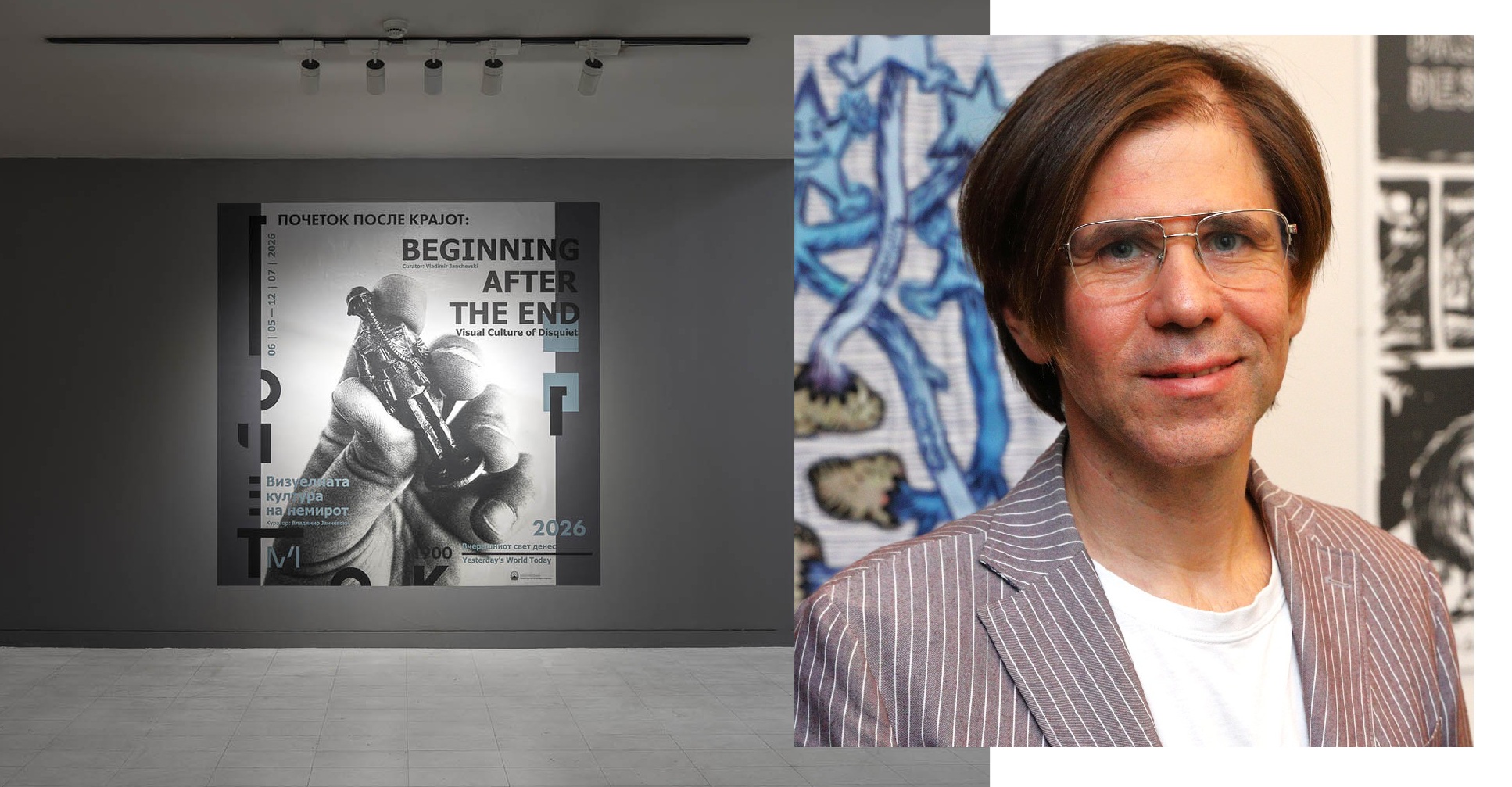
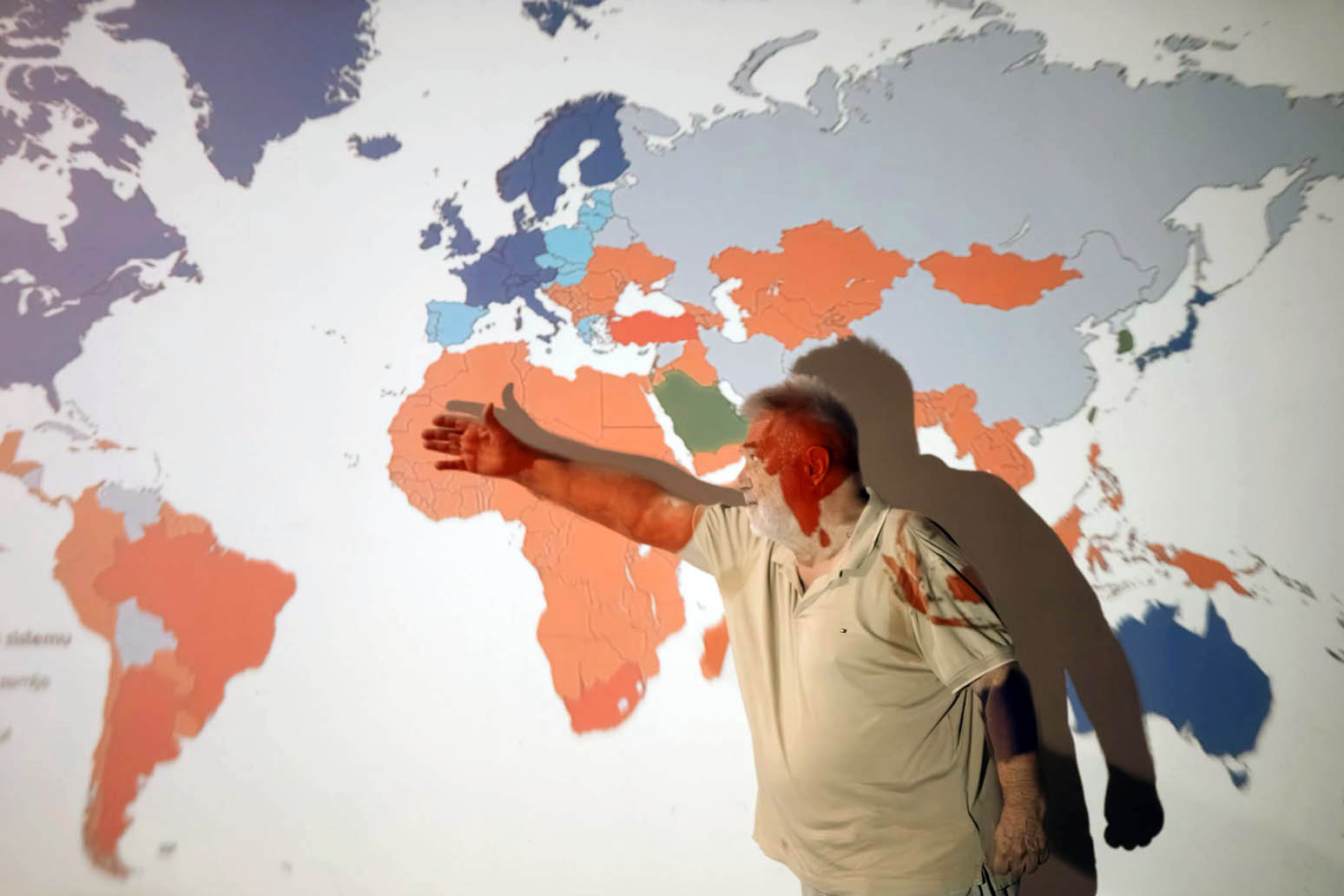
Discursive event – Conversation with Dr. Vladan Jeremić within the framework of the project: “Beginning After the End: The Visual Culture of Disquiet, 1900–2026”
MoCA-Skopje, Friday, 27. November, 2026 at 7:00 PM
The conversation between Vladimir Janchevski, curator of the exhibition “Beginning After the End: The Visual Culture of Disquiet, 1900–2026” and the renowned artist and cultural theorist from Belgrade, Dr. Vladan Jeremić will address themes that Jeremić has explored for many years: the legacy of the artistic avant-gardes, the visual culture of unrest and protest, political satire, the photomontages of John Heartfield, and the contributions of the interwar generation of artists. The contemporary context—in which the social role of artistic practices is defined and analyzed—will be examined through the framework of Peter Bürger’s seminal Theory of the Avant-Garde. The discussion will also reference works by artists featured in the “Beginning After the End” exhibition, such as those by the OPA Group, Armando Lulaj, Nemanja Cvijanović, Tomato Košir, and others.
The conversation will be conducted in Macedonian and Serbian language.
Dr. Vladan Jeremić (Belgrade, 1975) is an artist and cultural theorist. He holds a degree in conservation and restoration from the Faculty of Applied Arts, University of Arts in Belgrade, where he also completed his MA studies in digital art. In 2020 he defended his PhD thesis at the Faculty of Political Science, University of Belgrade. The subject of his dissertation are the functions of artistic practices in conditions of transition, in the sense of their “suitability” for a certain purpose or task, according to the requirements of dominant discourses and through the analysis of Peter Bürger’s theory of the avant-garde and Rastko Močnik’s theory of symbolic formations. The main question from which the dissertation begins with the question, how and to what extent was art involved in social changes and neoliberal, that is, globalization processes in Serbia from 1991 to 2008, and what was its function in that context?
Vladan Jeremić was the editor of the art program of the Belgrade Youth Center (Dom omladine Beograda) and since 2010 he has been working as a project manager and editor at the Rosa Luxemburg Stiftung Southeast Europe. He was a member of the Board of Directors of the Association of Serbian Artists (ULUS) and the president of the Painting Section of this association. He was on the board of the “Lazar Trifunović” Award for art criticism and theoretical achievements of contemporary visual art. He is co-founder of the international platform “ArtLeaks” which deals with artists’ labour rights. He works on artistic and curatorial projects together with his partner Rena Raedle, with whom he explores the intersection of art and politics, exposing burning social contradictions. They exhibited at numerous exhibitions in the region and around the world, and their works are included in important museum and other public collections. Their official website is: www.raedle-jeremic.net/
You can read more about this work, which will soon be compiled into a new publication, at the following link:
https://nardus.mpn.gov.rs/bitstream/handle/123456789/18008/Disertacija.pdf? sequence=1&isAllowed=y
Interview with Jeremic: https://6yka.com/intervju/vladan-jeremic-umetnicke-avangarde-nekada- su-bile-mocna-vodilja-celom-drustvu-danas-je-to-skoro-nemoguce/
The exhibition Beginning After the End: The Visual Culture of Disquiet – Yesterday’s World-Today 1900–2026 held from May 6 to August 30 of this year, attracted a large number of visitors. On June 25, a guided tour of the exhibition was led by curator Vladimir Janchevski, alongside artists Luchezar Boyadjiev from Sofia and Driton Selmani from Prishtina.
The exhibition presented a selection from the curator’s collection, comprising books, posters, magazines, postcards, photographs, graphic prints, and other printed materials as well as a some of works from the MoCA Skopje Collection.
It features works by artists from the interwar period—such as John Heartfield and his contemporaries Josep Renau, Boris Klinch, and Boris Angelushev—as well as the subsequent generation, including Hector Cattolica, Klaus Staeck, Peter Kennard, and Claude Baillargeon. Also included were works by various anonymous artists and designers, alongside literature related to the exhibition’s theme.

i heard whispers at table rock, Sound Performance by Leo Robinson
05/11/2026
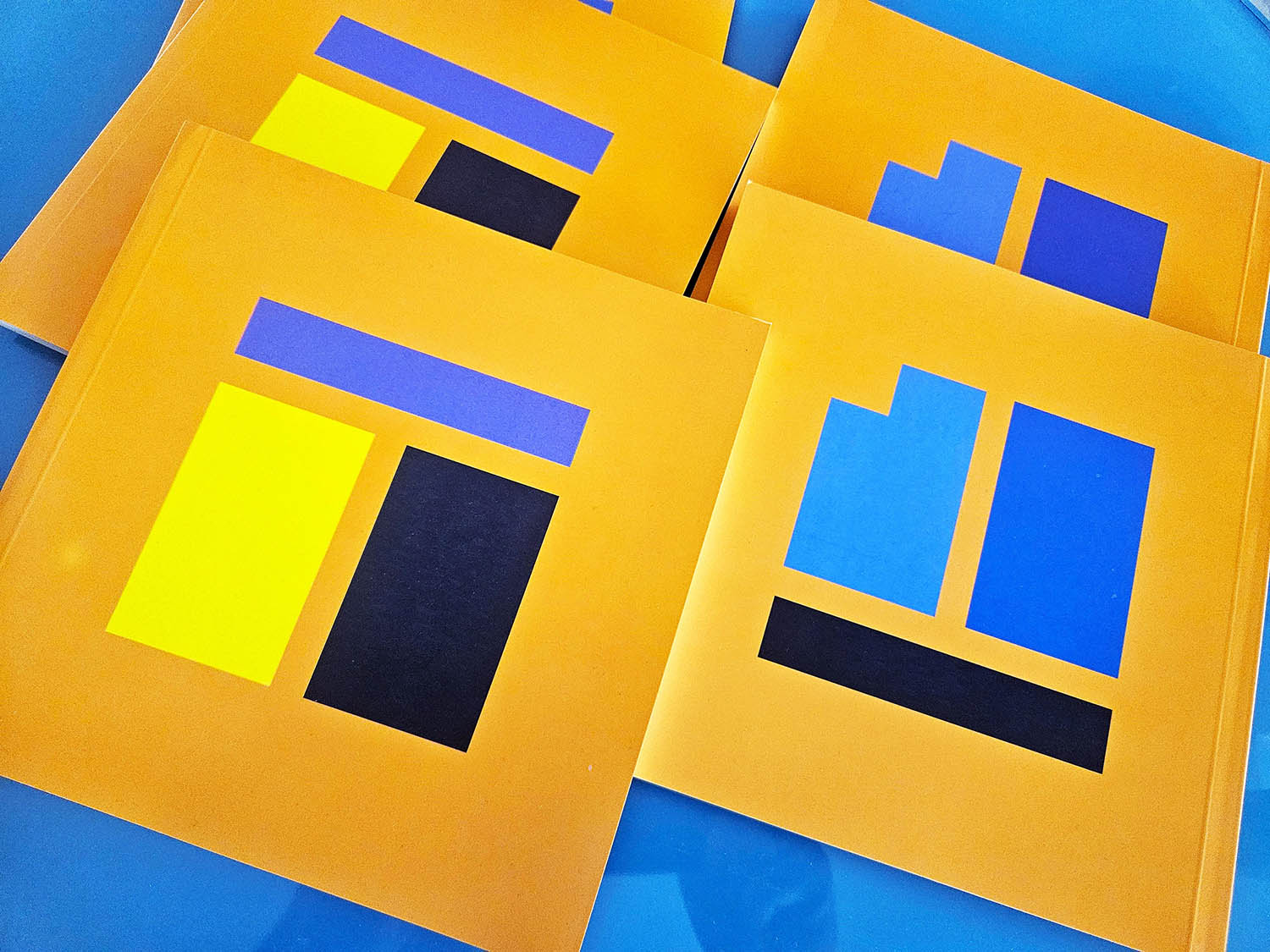
Processes Behind the Artwork by Dushan Perchinkov
01/10/2026 at 12,00
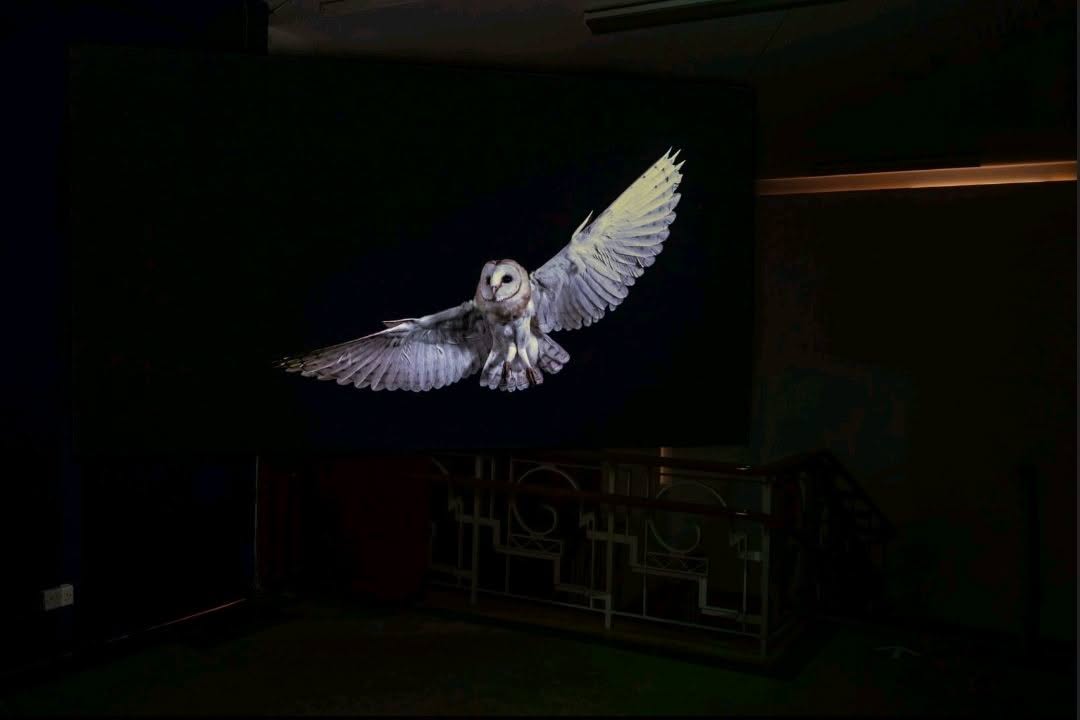
Discussion with The Otolith Group
11/09/2026, at 12,00
Rastko Močnik on Contemporary Capitalism and Art
26/06/2026 во 19:00

